A Narrow Shoulder Demands More Than a Powerful Tow Truck
A vehicle stranded inches from moving traffic leaves very little room for mistakes. The operator must consider the road surface, passing vehicles, available clearance, and the disabled vehicle’s condition before deciding how to move it. For motorists searching for a tow truck in Baton Rouge LA, the safest recovery starts with choosing the right equipment and planning the move before pulling begins. Drivers can contact Guys Towing for vehicle towing in the Baton Rouge area.
A narrow shoulder can make an ordinary breakdown more complicated. The tow truck may not have enough room to line up behind the disabled vehicle, deploy its equipment, or load it at a suitable angle. A safe recovery, therefore, depends on more than just truck size. It requires a clear assessment of traffic exposure, ground stability, vehicle weight, mechanical damage, and the route out of the shoulder.
What Operators Check Before Positioning a Tow Truck
The first consideration is traffic exposure. Operators assess the direction and speed of approaching traffic, visibility, nearby curves, hills, exits, and the distance between the disabled vehicle and the travel lane. A tow truck positioned too close to moving traffic can expose the operator and other road users to unnecessary danger.
Ground stability is equally important. A shoulder made of loose gravel or wet soil may not provide suitable support for a heavy recovery vehicle. A sloped surface can also affect how the truck sits while equipment is deployed. If the ground is unstable or the shoulder is too narrow, the operator may need to change the setup or seek additional scene support.
The disabled vehicle’s condition determines the next steps. Its size, weight, wheel position, steering condition, ground clearance, and visible damage all affect how it can be moved. A passenger car with a simple breakdown is different from a box truck with a damaged axle or an 18-wheeler tractor that has left the pavement.
Operators also need to consider the direction in which the vehicle can be removed. Pulling it toward the nearest open area may not be appropriate if that route contains a steep slope, a barrier, or an obstacle. A suitable recovery path should allow the vehicle to move without unnecessary contact with roadside structures.
Why a Narrow Road Shoulder Changes the Recovery Plan
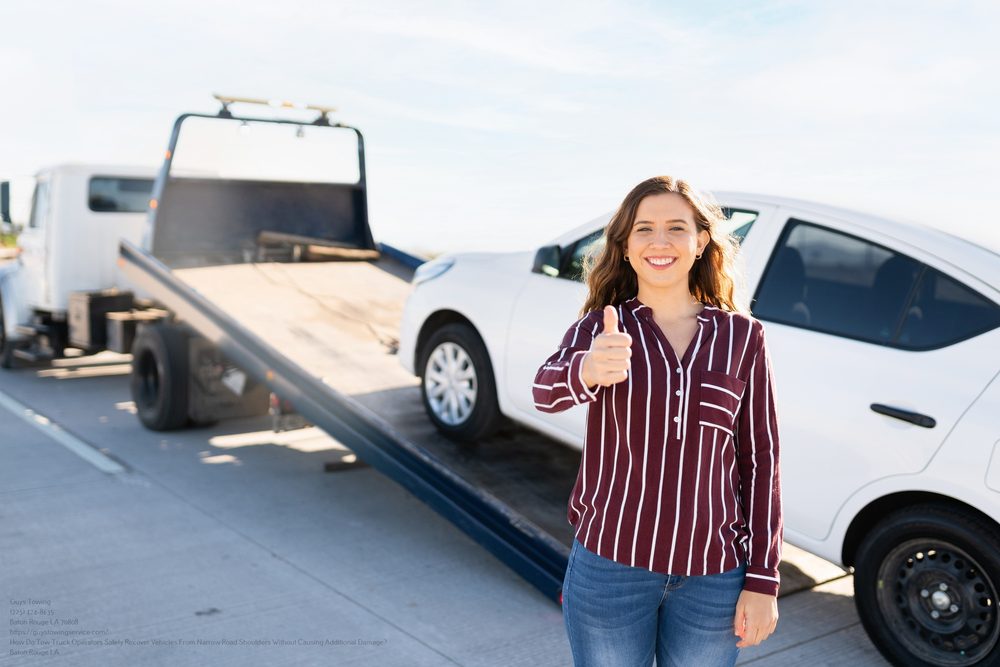
Not every shoulder provides a safe place to work. Some are paved and relatively level, while others slope toward a ditch, have loose gravel, or end beside a guardrail. A vehicle may also be partly inside the travel lane, leaving limited space for a nearby truck to position itself.
The Baton Rouge Metro Area includes busy highways, commercial routes, and local roads with different shoulder widths and roadside conditions. A recovery near a highway entrance may involve faster-moving traffic and limited visibility. At the same time, a breakdown on a local road may offer more room but pose challenges such as soft ground or drainage ditches. Operators need to assess the actual location rather than assume every roadside situation is similar.
The Federal Highway Administration explains that roadside clear zones depend on factors such as traffic volume, vehicle speed, and roadside geometry. Its guidance on clear zones and horizontal clearance helps explain why a shoulder’s width alone doesn’t determine whether it is safe. The slope, surface, and nearby obstacles also matter.
A flat tire, mechanical failure, or collision can leave a vehicle in a particularly awkward position. If its wheels won’t roll, the operator may need to use a winch or another recovery method instead of simply towing it forward. A vehicle resting against a barrier or partly down an embankment calls for a different plan again.
Need Precision Towing Or Recovery?
Contact Guy’s Towing today for fast, professional assistance.
How Winching and Equipment Selection Help Prevent Damage
Winching can help move a disabled vehicle when it cannot roll normally or is positioned beyond the reach of a conventional tow hookup. However, the line’s direction, the vehicle’s attachment points, and the resistance encountered during movement all matter. A poorly planned pull can cause the vehicle to shift unexpectedly or place stress on damaged components.
A tow operator considers whether the tires can rotate, whether the steering or suspension is compromised, and whether the vehicle is resting against an obstacle. If a wheel is trapped or an axle is damaged, dragging the vehicle may create further mechanical problems. The recovery method should account for those conditions before tension is applied.
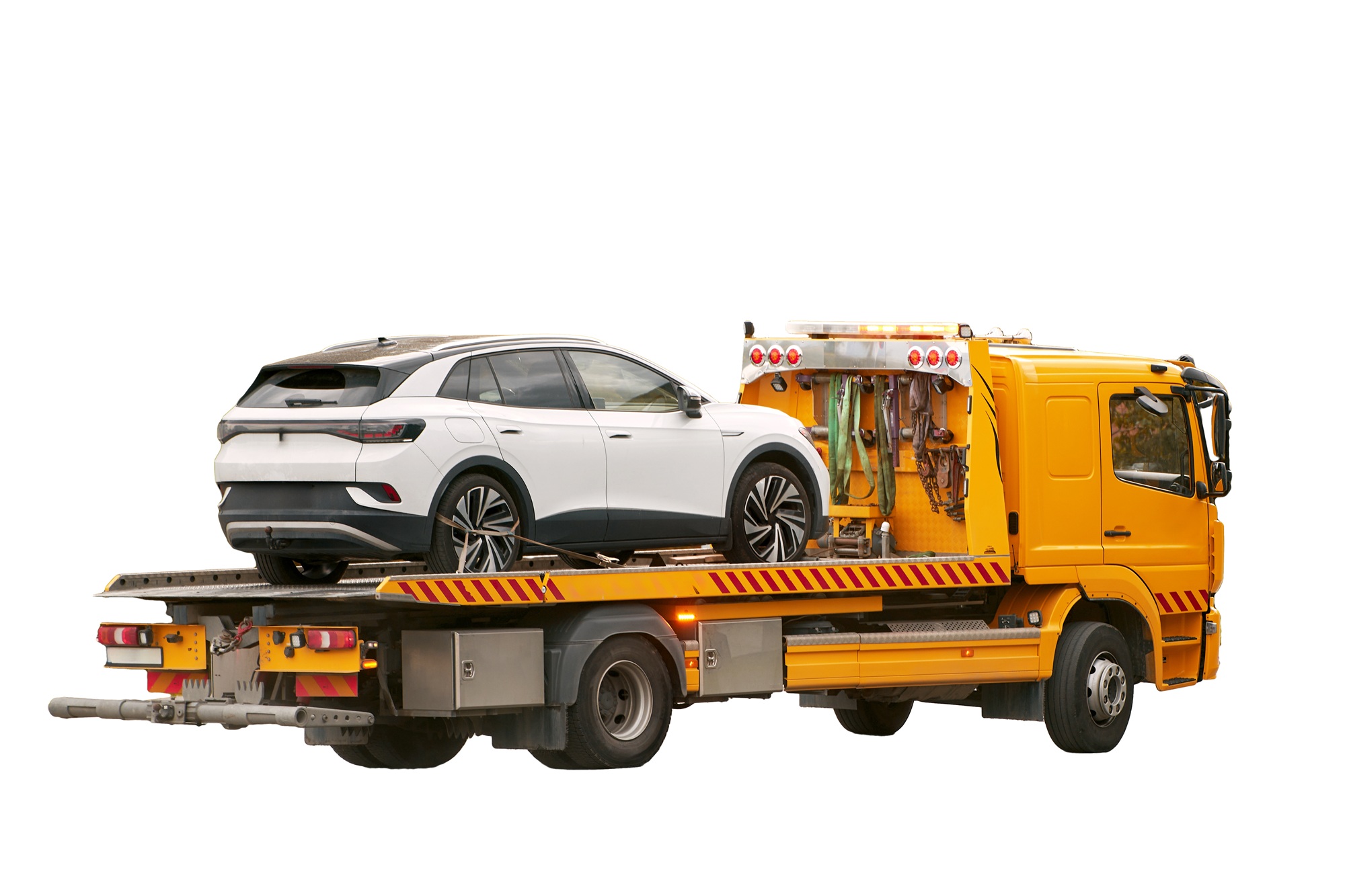
Equipment must also match the vehicle. Light-duty trucks are suitable for many passenger vehicles, while medium-duty vehicles and commercial vehicles may require a larger unit. An appropriate heavy-duty towing service may be needed for larger loads, including 18-wheeler tractors. Heavy-duty winching services can also be relevant when a commercial vehicle has moved off the road or become stuck in a difficult position.
Guys Towing’s website describes a fleet that includes light-, medium-, and heavy-duty tow trucks, as well as equipment for vehicle recovery and extraction. Its heavy-duty towing information also lists commercial trucks and tractor-trailers among the vehicle types it handles. The right equipment helps enable a controlled recovery, but the operator still needs adequate working space and a safe setup.
How Traffic, Weather, and Visibility Affect a Roadside Recovery
A recovery scene can become more hazardous when approaching drivers have little time to react. Curves, hills, heavy traffic, poor lighting, and blocked sightlines can reduce the distance at which motorists notice a stopped vehicle or tow truck. Warning lights and appropriate traffic controls help alert approaching drivers, but they cannot eliminate every roadside risk.
Weather adds another variable. Rain can reduce tire grip and make unpaved shoulders unstable. Darkness can make the pavement edge harder to distinguish, while glare from headlights may reduce visibility around the recovery truck. These conditions are relevant throughout South Louisiana, where wet roads and heavy rainfall can complicate roadside work.
If the vehicle is blocking a lane or the scene presents an immediate danger, drivers should not attempt to direct traffic or attach recovery equipment themselves. Emergency services or the appropriate authorities may be needed to manage the scene. The priority is to protect people first, then move the vehicle when conditions allow.
What Drivers Should Tell Dispatch Before Help Arrives
The information provided during the initial call can help the towing company understand what equipment may be required. A vague description such as “the car is on the side of the road” leaves important details unanswered. A more useful report includes the road name, direction of travel, nearest exit or landmark, vehicle type, and whether any part of the vehicle is blocking traffic.
Drivers should also explain whether the vehicle has a flat tire, visible collision damage, locked wheels, or a problem that prevents it from rolling. If it has slid into a ditch or is resting at an unusual angle, that detail matters. A possible fuel issue should also be mentioned. In some situations, fuel delivery may resolve a breakdown without a tow, but a vehicle in an unsafe position may still need professional recovery.
Passengers should avoid standing near passing traffic or attempting to help move the vehicle. Exiting on the traffic-facing side can be especially dangerous. The safest place to wait depends on the location and conditions, so occupants should follow emergency instructions and avoid unnecessary movement around the roadside scene.
When requesting a tow, drivers can also identify whether the vehicle is a passenger car, box truck, or commercial tractor. This helps dispatch determine whether a standard truck or a larger unit may be appropriate. Guys Towing asks callers to provide their vehicle type and location so the company can determine an appropriate response.
Local Coverage and the Importance of Choosing the Right Recovery Support
A breakdown can happen while traveling through Baton Rouge or in nearby communities such as Port Allen, Denham Springs, and areas of East Baton Rouge Parish, West Baton Rouge Parish, Ascension Parish, or Livingston Parish. Road layout and access can vary between these locations, so the recovery plan should reflect the actual roadside conditions rather than rely on a generic approach.
Guys Towing identifies Baton Rouge as one of its service locations and lists 24-hour emergency towing, commercial towing, and vehicle recovery among its services. Its website also provides a Port Allen vehicle pickup address. For drivers in the wider area, confirming the vehicle’s exact location and condition is more useful than relying on a broad description of the service area.
Baton Rouge may be known as a perfect city for visitors who enjoy delectable food, eclectic culture, distinct architecture, and Louisiana Gumbo, but a roadside emergency calls for a different kind of local knowledge. Drivers need practical assistance that accounts for the road, traffic, and vehicle. Clear communication and suitable equipment can provide peace of mind knowing the recovery is being planned around the situation.
A Careful Recovery Starts Before the Vehicle Moves
Recovering a vehicle from a narrow shoulder requires sound judgment about traffic, ground conditions, equipment, and the disabled vehicle’s mechanical state. The safest approach isn’t always the fastest-looking one. An operator may need to reposition the truck, adjust the recovery angle, or coordinate additional scene support before moving the vehicle.
For motorists who need a tow truck in Baton Rouge LA, sharing accurate information helps the provider prepare for the job. Guys Towing offers towing and vehicle recovery services in the region, with emergency assistance available around the clock according to its website. When a vehicle is stranded in a confined roadside location, choosing suitable recovery support can help limit additional damage and reduce unnecessary exposure to traffic.
Need Precision Towing Or Recovery?
Contact Guy’s Towing today for fast, professional assistance.